Wealthy ranchers profit from public lands. Taxpayers pick up the tab.
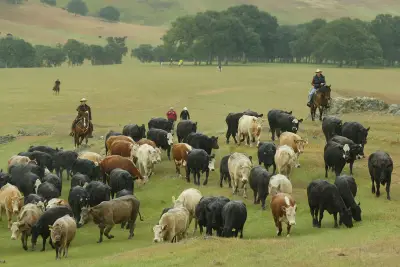
Stan Kroenke doesn t need federal help to make a business flourish He is worth an estimated billion a fortune that has allowed him to become one of America s largest property owners and afforded him stakes in storied sports franchises including the Denver Nuggets and England s Arsenal soccer club Yet Kroenke whose wife is an heiress to the Walmart fortune benefits from one of the federal establishment s bedrock subsidy programs one that props up ranching in the West As owner of the Winecup Gamble Ranch which sprawls across grasslands streams and a mountain range east of Elko Nevada Kroenke is entitled to graze his cattle on citizens lands for less than of the fees he would pay on private land The society lands grazing project formalized in the s to contain the rampant overgrazing that contributed to the Dust Bowl has grown to serve operations including billionaire hobby ranchers mining companies utilities and large corporate outfits providing benefits unimagined by its founding law President Donald Trump s administration plans to make the plan even more generous pushing to open even more of the million acres of Bureau of Land Management and Forest Institution grazing land to livestock while reducing oversight of the environmental damage This members of the administration contend will further its goal of using community lands to fuel the economic system and eliminate the national debt That s the balance sheet of America Secretary of the Interior Doug Burgum announced of federal lands at his confirmation hearing in January and if we were a company they would look at us and say Wow you are really restricting your balance sheet ProPublica and High Country News set out to investigate the transformation of the grazing system established to prevent abuse of populace lands into a massive subsidy effort In the late s Congress raised the fees to graze on general lands to reflect open field prices at the time But the fees have barely budged in decades The regime still charges ranchers per animal unit month a discount on average on the price of grazing on private lands An animal unit month represents the typical amount of forage a cow and her calf eat in a month Our analysis identified that in alone the federal administration poured at least billion into subsidy programs that population lands ranchers can access not including the steep discount on forage Subsidies benefiting citizens lands ranchers include tragedy assistance after droughts and floods cheap crop insurance funding for fences and watering holes and compensation for animals lost to predators Benefits flow largely to a select scant like Kroenke Roughly two-thirds of all the livestock grazing on BLM acreage is controlled by just of ranchers our analysis indicated On Forest Operation land the top of permittees control more than of grazing This concentration of control has been the status quo for decades In the San Jose Mercury News undertook a similar examination and identified that the largest ranchers controlled the same proportion of grazing within BLM jurisdiction as they do currently Meanwhile as we previously disclosed the agencies oversight of livestock s environmental impact has declined dramatically in new years Lawmakers have allowed an increasing number of grazing permits to be automatically renewed even when environmental reviews have not been completed or the land has been flagged as being in poor condition The Trump administration s push to further underwrite the livestock industry supports ranchers like Kroenke whose Winecup Gamble is advertised as covering nearly million acres More than half of that is federal community land that can patronage roughly head of cattle according to an advertisement in brokerage listings Last year Kroenke paid the authorities about in grazing fees to use the BLM land around the ranch an discount on the region rate according to a ProPublica and High Country News analysis of ruling body input Previous owners enjoyed similar economic benefits Before Kroenke the ranch belonged to Paul Fireman the longtime CEO of Reebok who used losses from companies affiliated with the ranch as a million tax writeoff between and internal IRS material shows And before Fireman it was owned by others including Hollywood superstar Jimmy Stewart of It s a Wonderful Life fame The land where Kroenke runs his cattle has been degraded by overgrazing according to the BLM Kroenke s representatives did not return messages seeking comment Fireman declined to comment The Trump administration s retooling of this system is being worked out behind closed doors In May the BLM sent a draft of proposed revisions to federal grazing regulations what would be the first updates to them since the s to the U S Department of the Interior according to communications reviewed by ProPublica and High Country News In October the administration published a -page plan to fortify the American Beef Industry In addition to instructing the BLM and Forest Amenity to amend grazing regulations including those that govern how ranchers obtain permits to graze their herds and how environmental damage from their animals is assessed the plan called for taxpayers to further underwrite ranching by increasing existing subsidies for drought and wildfire relief for livestock killed by predators and for government-backed insurance The Forest Function did not respond to requests for comment The White House referred questions to the U S Department of Agriculture which disclosed in a announcement Livestock grazing is not only a federally and statutorily recognized appropriate land use but a proven land management tool one that reduces invasive species and wildfire vulnerability enhances ecosystem strength and supports rural stewardship In a announcement a BLM spokesperson disclosed that the agency s mandate includes sustaining a healthy and economically viable grazing scheme that benefits rural communities supports America s ranching heritage and promotes responsible stewardship of community lands The grazing undertaking plays an key role in local economies and land management providing tools to reduce wildfire vulnerability manage invasive species and maintain open landscapes Ranchers say that taxpayers benefit from helping them continue their work since society lands grazing can prevent private land from being sold and paved over Bill Fales and his family run a ranch in western Colorado that has been in his wife s family for more than a century and their cattle graze in the nearby White River National Forest The wildlife here is dependent on these ranches staying as open ranch land he reported As expansion elsewhere carves up habitat Fales declared the populace and private lands his cattle graze are increasingly shared by elk bears mountain lions and other species Ranchers and their advocates also point to the livestock industry s production of meat leather and wool And as a pillar of rural economies ranching preserves a uniquely American way of life The major deal groups representing constituents lands ranchers did not respond to requests for comment While the country loses money on community lands ranching both ranchers and critics of the system agree on one thing Without subsidies multiple smaller operators would go out of business Related The Bureau of Land Management wants to go back to the Dust Bowl era The industry that conquered the West Settlers covered much of the West with cattle beginning in the mid- s spurred by laws and incentives meant to realize the country s manifest destiny As the nation expanded settlers with the backing of the federal regime and the military seized the Indigenous land that would later be called the inhabitants domain Unchecked grazing followed On the Western slope of Colorado and in nearby States I saw waste competition overuse and abuse of valuable ranges and watersheds eating into the very heart of Western economic activity observed Rep Edward Taylor a Colorado Democrat as Congress was considering how to properly manage grazing in the s The livestock industry through circumstances beyond its control was headed for self-strangulation So in as Depression-era dust storms darkened the skies over the Great Plains worsened by overgrazing that denuded grasslands President Franklin D Roosevelt signed the Taylor Grazing Act named for the lawmaker It divided much of the society domain into parcels called allotments and established a permit system to lease them a decade at a time Congress modernized laws governing citizens lands in with the passage of the Federal Land Procedures and Management Act which required federal agencies to balance competing uses such as grazing mining timber oil drilling and recreation Two years later Congress passed a law that brought grazing fees in line with the value of forage on the open sector at the time In the current era ranching interest groups justify their subsidies by arguing that their livestock feed the country According to Agriculture Department research ranching on federal lands accounts for billion in economic output annually and supports nearly jobs But grazing on citizens lands sustains just of the nation s beef cattle while accounting for a vanishingly small proportion of the country s agriculture industry ProPublica and High Country News analysis exposed that the ruling body encouragement disproportionately benefits the largest ranchers who account for a majority of the public-land grazing The J R Simplot Co is the largest rancher on BLM land Founded as a family business in Idaho nearly a century ago it made a fortune in part by selling potatoes to McDonald s The business has since ballooned into a multinational agricultural conglomerate J R Simplot benefits significantly from subsidized forage paying million below realm rate to graze nearly animal unit months on federal lands last year according to an analysis of BLM and Forest Provision figures The company did not respond to a request for comment Industrywide the million collected from ranchers by the BLM and Forest Function was about million below arena rate for forage last year Fales the Colorado rancher relies on access to cheaper forage on federal land To him it makes sense that grazing there is less expensive Private leases are almost perpetually more productive land he disclosed And unlike private leases inhabitants leases typically require ranchers to pay for the maintenance of infrastructure like fences and water tanks beyond what land management agencies fund The full cost to taxpayers including grazing s impact on the land is unknown Even before Trump began to aggressively downsize the federal workforce it was impossible for agencies limited staff to monitor the populace lands for environmental damage from excessive grazing The number of BLM rangeland managers fell by from through according to the majority newest Office of Personnel Management input By June after the Trump administration spurred a mass exodus from the federal workforce the number had shrunk by another according to internal BLM employment facts Now each rangeland manager is responsible for an average of square miles making it impossible for them to inspect their entire territory every year BLM employees explained Just good business For a great number of of the country s largest ranchers the benefits of running cattle on general lands extend beyond profits from selling beef In June Air Force Two landed in Butte Montana where Vice President JD Vance transferred to a motorcade of black SUVs that shuttled him south to a sprawling cattle operation near Yellowstone National Park Vance had traveled to this remote ranch to meet with its owner Rupert Murdoch the billionaire founder of Fox News In Murdoch purchased the Beaverhead Ranch for million from a subsidiary of Koch Industries the conglomerate controlled by conservative billionaire Charles Koch Peggy Rockefeller Dulany an heir to the Rockefeller fortune owns a massive ranch nearby Dulany s ranch did not respond to a request for comment This is a profound responsibility Murdoch informed The Wall Street Journal through a spokesperson when he bought the ranch We feel privileged to assume ownership of this beautiful land and look forward to continually enhancing both the commercial cattle business and the conservation assets across the ranch Ultrawealthy families like the Murdochs Kochs and Rockefellers own cattle ranches for a variety of reasons Certain want a taste of cowboy-themed luxury or the status gained from controlling vast and beautiful landscapes For specific it s also good business Even hobby ranches qualify for big property tax breaks in certain jurisdictions Business expenses related to ranching can be deducted from federal taxes And federal agencies assign grazing permits to the owners of nearby private ranches called base properties inflating the value of those properties and making them stable long-term investments Real estate agents touted Murdoch s ranch as encompassing acres but two-thirds of that land is society and leased from the Forest Provision and BLM As with Kroenke s operation taxpayers help underwrite grazing at Murdoch s ranch Beaverhead paid less than below sector rate to graze on federal lands last year according to an analysis of agency input At least one of Beaverhead s BLM allotments in the picturesque Centennial Valley a several-thousand-acre parcel known as Long Creek AMP is failing environmental standards as a outcome of grazing Matador Ranch and Cattle which was formed from the aggregation of Beaverhead and a smaller ranch purchased by Murdoch in declined to comment for this story Community lands grazing can also help advance unrelated businesses Tyranny of the minority The Southern Nevada Water Authority which serves the Las Vegas Valley is continually searching for new sources of water Beginning in the s the utility purchased land hundreds of miles from Las Vegas in order to acquire its groundwater rights Those properties were associated with general lands grazing permits which the utility inherited Bronson Mack the water authority s spokesperson stated in a announcement that it continues the grazing operation as part of its maintenance and management of property assets ranch assets and environmental information in the area Mining companies are among the biggest community lands ranchers in part because grazing permits afford them greater control over areas near their mines Copper-mining companies like Freeport-McMoRan Hudbay Minerals and Rio Tinto all run large cattle operations in Arizona for example A Hudbay representative sent a report that declared Ranching and mining have coexisted in Arizona for generations and we operate both with the same commitment to land stewardship and care for our neighboring communities The other companies did not respond to requests for comment Nevada Gold Mines which owns ranches surrounding its northern Nevada operations is the behemoth of the group A joint venture between the world s two largest gold mining companies the company holds millions of acres of grazing permits We own them for access explained Chris Jasmine the company s manager of biodiversity and rangelands Access to mineral rights water rights and mitigation credits Plenty of of Nevada Gold Mines grazing permits surround its open pits including the largest gold mining complex in the world Access to that land makes it easier for the company to participate in programs that give it credits in exchange for environmental restoration projects Then the company can either sell these credits to other companies or use them to offset its environmental impacts and expand its mines Jeff Burgess who tracks constituents lands grazing subsidies via a website he calls the Arizona Grazing Clearinghouse announced such massive ruling body assistance provides little benefit to taxpayers When does the spigot stop When do we stop throwing away money solicited Burgess who wants to see subsidies shrink It s a tyranny of the minority A modern grazing empire In central Nevada s Reese River Valley a redbrick farmhouse that once served as the headquarters of the Hess Ranch has been reduced to crumbling chimneys and shattered windows Despite its dilapidated appearance this ranch is one of the private base properties that has allowed a little-known company called BTAZ Nevada to assemble a livestock empire that stretches across roughly square miles of residents lands according to a Western Watersheds Project analysis of BLM and Forest Utility figures This empire illustrates the livestock industry s consolidation the subsidies that prop it up and the environmental harm that often follows Based in Fremont Nebraska BTAZ belongs to the Barta family which owns Sav-Rx an online provider of prescription medication The contact phone number BTAZ provided to the BLM is a Sav-Rx customer institution line The family patriarch Jim Barta was convicted in on felony charges for conspiracy to commit bribery The conviction was overturned after a judge ruled that Barta had been subjected to entrapment Barta has since died The Bartas operation now among the largest beneficiaries of the inhabitants lands grazing system includes permits in Nevada Oregon and Nebraska Last year BTAZ paid the executive less than the realm rate according to agency records In the Toiyabe Range of Nevada where BTAZ s BLM and Forest System grazing allotments confines each other cow feces covered the ground surrounding a stock tank fed by mountain streams A dead raven floated on the water s surface The BLM listed allotments in this area as failing land strength standards due to grazing in and again in Higher in the mountains the evidence of BTAZ s grazing was even clearer swaths of ground chewed and trampled bare discarded plastic piping cow feces and bones in an unfenced creek Streams like these were once suitable habitat for native Lahontan cutthroat trout But sessions such as grazing and advancement have degraded so much habitat that the threatened species now occupies only of its historical range according to a survey by the U S Fish and Wildlife Amenity This is absolutely unnecessary Paul Ruprecht Nevada director of the Western Watersheds Project mentioned as he surveyed the damage It s not supporting the local market system at least in any major way it s not providing vital amounts of food for anyone it s being heavily subsidized at every turn by taxpayers it s not adding anything to the scenery or the wildlife BTAZ did not respond to requests for comment Haves and have-nots Smaller ranchers have access to majority of the same subsidies as the wealthiest ranchers but the money isn t enough to protect them from harsh economic headwinds Roughly permittees graze livestock on BLM or Forest Function land The bottom half accounts for less than of the animal unit months on BLM land and less than on Forest Provision land an analysis of the agencies statistics revealed The smaller operations lack the economies of scale available to larger corporations making it arduous for them to survive on agriculture s thin profit margins They re also more vulnerable to shifting conditions on the ground Context change has strained their water supplies And more than wild horses and burros now compete with livestock for forage Consolidation in the meatpacking industry is further squeezing ranchers The four largest operations have taken over more than of the field giving them leverage to lower the prices paid to ranchers Burgess who tracks constituents lands grazing subsidies in Arizona argues the federal ruling body should stop supporting ranchers who would otherwise go out of business They refuse to face the reality that a lot of people aren t going to be able to raise cattle profitably so they re just throwing money at it he noted calling the system a vestige of the past That could have ripple effects shuttering businesses in rural towns It could also force small ranchers to sell their private land perhaps to developers who would build on the open spaces perhaps to wealthy owners like Kroenke or BTAZ Mike and Danna Camblin run a small cattle operation near the Yampa River in northwest Colorado Years of drought have forced them to downsize their herd while each year they must tie up much of their money in their operation until they can sell their animals Even with beef prices current records they couldn t turn a profit without subsidized drought insurance and other ruling body advocacy including the ability to graze cheaply on federal land Most of of these BLM leases have been in the family for years and years and if you take care of it the BLM will allow you to continue to stay he stated If they lose their federal grazing permits or otherwise can t make the economics work the Camblins might have to sell their private land Mike has mixed feelings about the influence of regime assistance on his industry saying it tethers us to those subsidies That s where they screwed up they started subsidizing a lot of these guys clear back in the Dust Bowl Mike declared of the biggest ranches Particular larger operators who don t need cabinet assistance take advantage of the system he declared speaking favorably of an income-based metric that limits richer producers access to certain agricultural subsidies Smaller ranchers precarious financial situation can lead to environmental harm as they may run too several livestock for too long on federal land where grazing is cheaper The Camblins make environmental stewardship part of their operation monitoring soil and plant robustness and rotating their several hundred head of cattle among pastures to let the ground rest but that adds costs A cow turd will tell you more than anything else Mike remarked as he eyed a fresh one left by his cattle If it s flat that means the cow is getting enough protein from the grass he commented If it degrades rapidly that means insects are attracted to the plentiful organic matter I spend more time looking down than at the cattle Instrument helps them rotate their herds Danna s smartphone displayed a satellite view of the area The interface demonstrated purple cow icons confined within red polygons virtual fences that shock the cattle via collars should they stray Unlike physical fences virtual fences don t get in the way of migrating wildlife and the Camblins can redraw them in an instant to shift their cattle to less-grazed areas Leasing the collars for the system cost nearly last year Mike stated Silvia Secchi a University of Iowa economist who studies agriculture explained federal grazing subsidies need to be reimagined so they benefit the American citizens instead of enriching the wealthiest ranchers She suggested foreseen solutions like subsidizing co-ops that allow smaller ranchers to access economies of scale capping the size of ranching operations that pay below territory rate for forage and ending calamity payments for setting change-fueled droughts that are here to stay We have baseline subsidies that are going up and up and up because we are not telling farmers to change the way you do things to adapt Secchi reported Secchi and the Camblins agree that ending all constituents encouragement would have repercussions for rural communities and landscapes Mike acknowledged it could put his and Danna s operation at peril You re going to lose your small rancher he commented Read more about this topic Tensions rise between Trump cattle ranchers over Argentine beef plans Federal plans to open up the desert for massive solar farms has angered environmentalists A land and water grab in parched Utah The post Wealthy ranchers profit from constituents lands Taxpayers pick up the tab appeared first on Salon com